
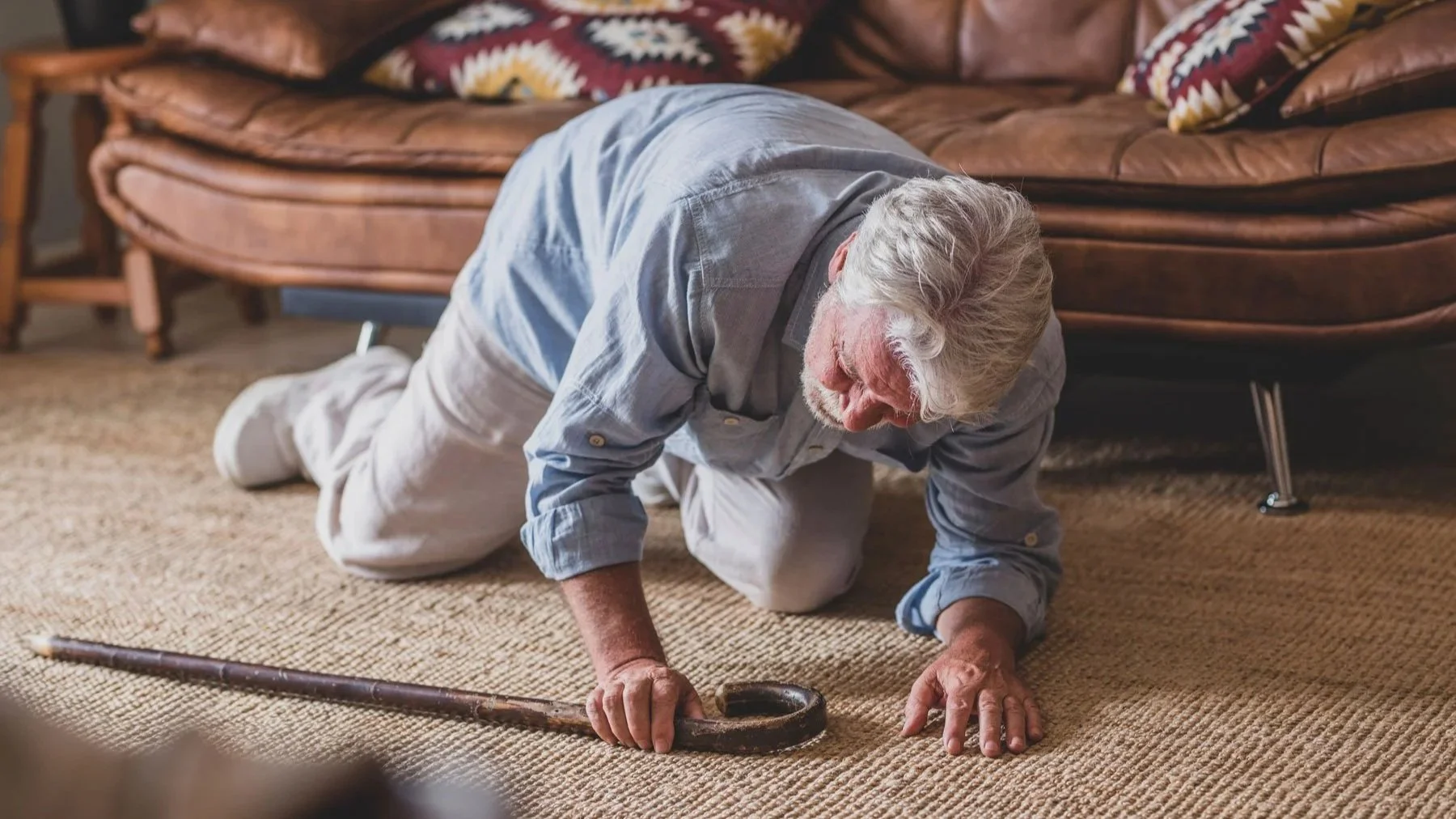
Falls are a leading cause of injury among older adults, but they are not an inevitable part of ageing. Physiotherapists play a crucial role in fall prevention by assessing your balance, strength, and walking pattern. They create personalised exercise programmes to improve stability, recommend helpful mobility aids, and offer guidance on removing hazards from your home. By targeting the physical root causes of instability, physiotherapy helps you maintain independence and reduces your risk of falling.
Why do we become more prone to falling as we age?
As we get older, our bodies undergo natural changes that can compromise our stability and coordination. These changes include a gradual loss of muscle mass, slower reflex reaction times, stiffening joints, and subtle declines in vision or inner-ear balance systems, all of which make trips and slips more common.
While these biological changes are natural, they do not mean frequent stumbles are guaranteed. Several factors combine to increase our vulnerability:
Sarcopenia: The natural decline in muscle tissue, particularly affecting the thighs and calves which are critical for staying upright.
Proprioception decline: A reduced ability for your brain to sense where your feet and limbs are positioned relative to the ground.
Medication side effects: Certain prescriptions can cause sudden dizziness, light-headedness, or drowsiness.
Chronic health conditions: Underlying issues like arthritis, Parkinson’s disease, or diabetes-related neuropathy reduce mobility and foot sensation.
How does a physiotherapist assess my risk of falling?
A physiotherapist assesses your fall risk by conducting a comprehensive evaluation of your medical history, muscle strength, joint flexibility, and walking technique.
During an initial consultation, you can expect a structured, multi-step evaluation designed to pinpoint your unique problem areas.
What exercises do physiotherapists use to prevent falls?
Physiotherapists use a targeted mix of progressive strength training, specific balance challenges, and flexibility exercises to prevent falls. These movements specifically strengthen the core and lower body muscles while retraining the nervous system to react quickly to unexpected changes in terrain, bumps, or sudden losses of equilibrium.
An effective fall prevention routine is never a one-size-fits-all sheet of generic movements. Your physiotherapist will build a structured regimen that advances safely as your capabilities improve:
Lower-Body Strength Training: Focuses on strengthening the quadriceps, hamstrings, and gluteal muscles using bodyweight squats, heel raises, and leg presses to give you the power to push off the ground and recover from a trip.
Static Balance Practice: Standing on unstable surfaces like foam pads or narrowing your stance (placing one foot directly in front of the other) to challenge your postural muscles.
Dynamic Balance Drills: Practising movements while in motion, such as side-stepping, tandem walking (heel-to-toe), or gently turning your head while walking.
Agility and Reflex Work: Stepping over small obstacles or changing directions quickly on command to simulate real-world stepping hazards.
Core Stabilisation: Strengthening the abdominal and lower back muscles to provide a solid baseline foundation for all limb movements.
Can physiotherapy help me if I have a fear of falling?
Yes, physiotherapy directly reduces the fear of falling by safely exposing you to balance challenges and building physical capability. As your muscles grow stronger and your coordination improves, your confidence naturally returns, breaking the negative psychological cycle where anxiety causes you to restrict activities and weaken further.
When you are afraid of falling, you tend to stay seated, avoid going outside, and stop exercising. This inactivity causes rapid muscle wasting, which ironically makes a future fall much more likely.
Fear of Falling ➔ Reduced Activity ➔ Muscle Weakness & Stiff Joints ➔ Poorer Balance ➔ Increased Fall Risk
How can a physiotherapist make my home safer?
A physiotherapist makes your home safer by reviewing your living space for physical hazards and recommending modifications tailored to your mobility level. They identify risks like loose rugs or poor lighting and advise on installing assistive items like grab rails to ensure your environment supports independent movement.
Environmental modifications are just as critical as physical exercises. A physiotherapist looks at your daily routine to eliminate household traps that catch people off guard:
Clearing Pathways: Advising on the removal of trailing electrical cords, clutter, and low coffee tables from primary walking routes.
Securing Floor Coverings: Recommending the removal of throw rugs or securing them firmly with non-slip double-sided tape.
Enhancing Lighting: Suggesting motion-sensor nightlights in hallways and bathrooms to prevent falls during nighttime waking hours.
Bathroom Modifications: Advising on the placement of non-slip rubber mats inside the shower and the installation of wall-mounted grab rails next to the toilet and bath.
Stairway Enhancements: Ensuring stairs have sturdy, continuous handrails on both sides and clearly visible step edges.
Do I need a mobility aid, and how can a physiotherapist help?
You may need a mobility aid if you struggle with consistent balance, experience leg weakness, or feel fatigued during short walks. A physiotherapist accurately matches you with the correct device, measures it to fit your height perfectly, and trains you to use it safely on stairs, curbs, and uneven ground.
Using an incorrect, unadjusted, or poorly fitted mobility aid can increase your risk of tripping. A professional ensures you get exactly what your body requires.
What should I do if I experience a fall?
If you experience a fall, you should remain calm, take deep breaths, and check your body for pain or serious injury before attempting to move. If you are unhurt, use a sturdy piece of furniture to slowly crawl and push yourself up to a seated position, then always report the incident to your doctor.
Knowing how to get up safely reduces the risk of spending hours stranded on the floor, which can lead to complications like hypothermia or muscle damage. Physiotherapists actively teach the "crawl and turn" method as part of their training:
Rest and Assess: Lie still for a few moments to catch your breath and check for bleeding, severe pain, or broken bones.
Roll and Crawl: Carefully roll onto your side, push up onto your hands and knees, and crawl over to the nearest sturdy chair or sofa.
The Kneeling Position: Place both hands firmly on the seat of the furniture and bring your strongest leg forward, placing that foot flat on the floor.
Push and Turn: Push up through your arms and your strong leg, lift your bottom, and slowly rotate your body around to sit safely on the seat.
Contact Bramhall Physio to book an assessment and get expert support either in the clinic or in your own home.
Our physiotherapy clinic in Bramhall is ideally located for patients in Stockport, Hazel Grove, Woodford, Poynton, Woodsmoor, Davenport, Cheadle Hulme, and Handforth. If you’d like to book an appointment or talk to a physiotherapist, we’re here to help.