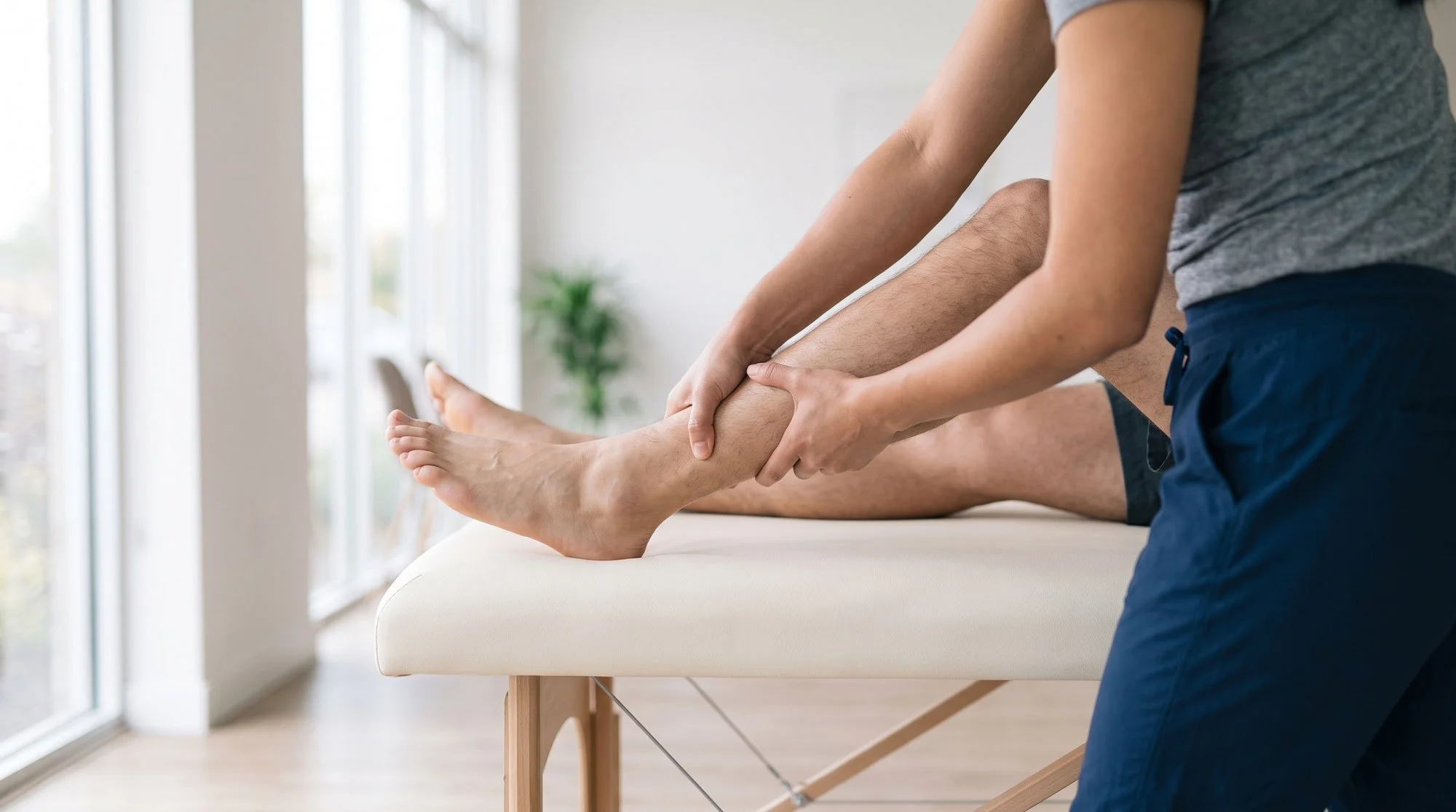
If you are struggling with calf pain, a physiotherapist can be your fastest route to recovery. Physiotherapy goes beyond temporary pain relief by identifying the root cause of your discomfort—whether it is a muscle strain, tendon issue, or nerve irritation. Through a combination of targeted exercises, manual therapy, and tailored advice, a physio helps heal the injury, restore full strength, and prevent the pain from returning so you can safely get back to your daily activities.
Why Does My Calf Hurt When I Walk?
Calf pain during walking usually happens because the muscles or tendons are overloaded, strained, or suffering from poor blood circulation. When you walk, your calf muscles must contract to push you forward, stretching and straining any existing tissue damage or inflammation with every step you take.
Common culprits behind this specific walking pain include:
Muscle strains: Micro-tears in the soleus or gastrocnemius muscles from sudden or repetitive movements.
Achilles tendinopathy: Inflammation or degeneration of the thick tendon connecting your calf to your heel.
Claudication: Restricted blood flow in the arteries, causing cramping pain that stops when you rest.
Deep Vein Thrombosis (DVT): A serious blood clot in the deep veins that requires urgent medical care.
A physiotherapist will watch how you walk and test your joint movement. This assessment isolates the exact tissue causing the problem, so you do not waste time treating the wrong issue.
What Does a Physiotherapist Do for Calf Pain?
A physiotherapist diagnoses the exact cause of your calf pain and creates a personalised recovery plan. They use hands-on treatments to ease initial pain and prescribe specific exercises to rebuild muscle strength. Additionally, they correct your movement patterns to protect you from injuring the area again.
Your physiotherapy treatment plan will generally combine several effective approaches:
Manual therapy: Deep tissue massage and joint movements to ease stiffness and improve blood flow.
Tailored exercise: Gradual loading routines that safely rebuild the strength of your damaged tissues.
Biomechanical analysis: Checking your gait, footwear, and running style to fix poor movement habits.
Education: Teaching you how to balance your activity levels with proper rest periods to avoid overloading.
Is My Calf Pain a Strain or Something Else?
You can usually tell a calf strain by a sudden sharp pain or "pop" during physical activity. Other causes, like tendon issues or nerve irritation, tend to develop slowly over time, feel dull and achy, or cause symptoms that travel down from your lower back into your leg.
It is highly important to understand what type of injury you have, as treating a nerve issue the same way as a muscle strain can delay your recovery.
| Injury Type | Common Symptoms | Typical Cause |
|---|---|---|
| Muscle Strain | Sudden sharp pain, bruising, swelling, pain when pointing toes. | Quick acceleration or jumping. |
| Achilles Tendinopathy | Stiffness in the morning, dull ache above the heel, pain improves with warmth. | Repetitive running or jumping. |
| Sciatica (Nerve) | Shooting or burning pain, tingling, numbness, travels down from the back. | Spinal disc irritation. |
| Deep Vein Thrombosis | Severe throbbing, redness, warmth to touch, swelling in one calf. | Prolonged sitting or post-surgery. |
How Long Does it Take a Physio to Fix Calf Pain?
Mild calf strains often improve within two to six weeks with regular physiotherapy support. However, severe muscle tears or chronic conditions like Achilles tendinopathy can take three to six months of dedicated rehab to heal completely and regain full athletic function. Your physiotherapist will discuss your individual rehab plan.
What Exercises Should I Do for Calf Pain?
The best exercises for calf pain focus on gently stretching the muscle in the early stages, followed by progressive strengthening routines like heel raises. You should always start with low-impact movements and only add heavy weights once you can exercise without experiencing any pain.
A standard, step-by-step exercise progression directed by a physiotherapist includes:
Gentle stretching: Using a towel or resistance band to pull your toes toward you while sitting.
Isometric holds: Raising up on your toes and holding the position to build endurance without moving the joint.
Calf raises: Lifting your heels up and down, starting on flat ground and moving to the edge of a step.
Plyometric drills: Incorporating light hopping and skipping to prepare your lower legs for running and sports.
When Should I See a Doctor Instead of a Physio for Calf Pain?
You should see a doctor immediately if your calf pain involves severe one-sided swelling, redness, noticeable warmth, or if you cannot put any weight on your leg. These symptoms can indicate a deep vein blood clot or a complete tendon rupture, both of which require urgent medical treatment.
Please seek immediate medical attention at an emergency department or doctor's surgery if you notice any of these red flags:
Sudden severe swelling: One calf looks significantly larger than the other.
Inability to bear weight: A complete inability to take even one or two steps on the affected leg.
Visible deformity: A noticeable gap or lump in the muscle belly or the Achilles tendon.
Systemic signs: Developing a fever, shortness of breath, or sudden dizziness alongside your leg pain.
If you are not experiencing any of these emergency symptoms, booking an appointment with a physiotherapist is the best next step to get your leg moving comfortably again.
Contact Bramhall Physio to book an assessment and get expert advice and support.
Our physiotherapy clinic in Bramhall is ideally located for patients in Stockport, Hazel Grove, Woodford, Poynton, Woodsmoor, Davenport, Cheadle Hulme, and Handforth. If you’d like to book an appointment or talk to a physiotherapist, we’re here to help.